
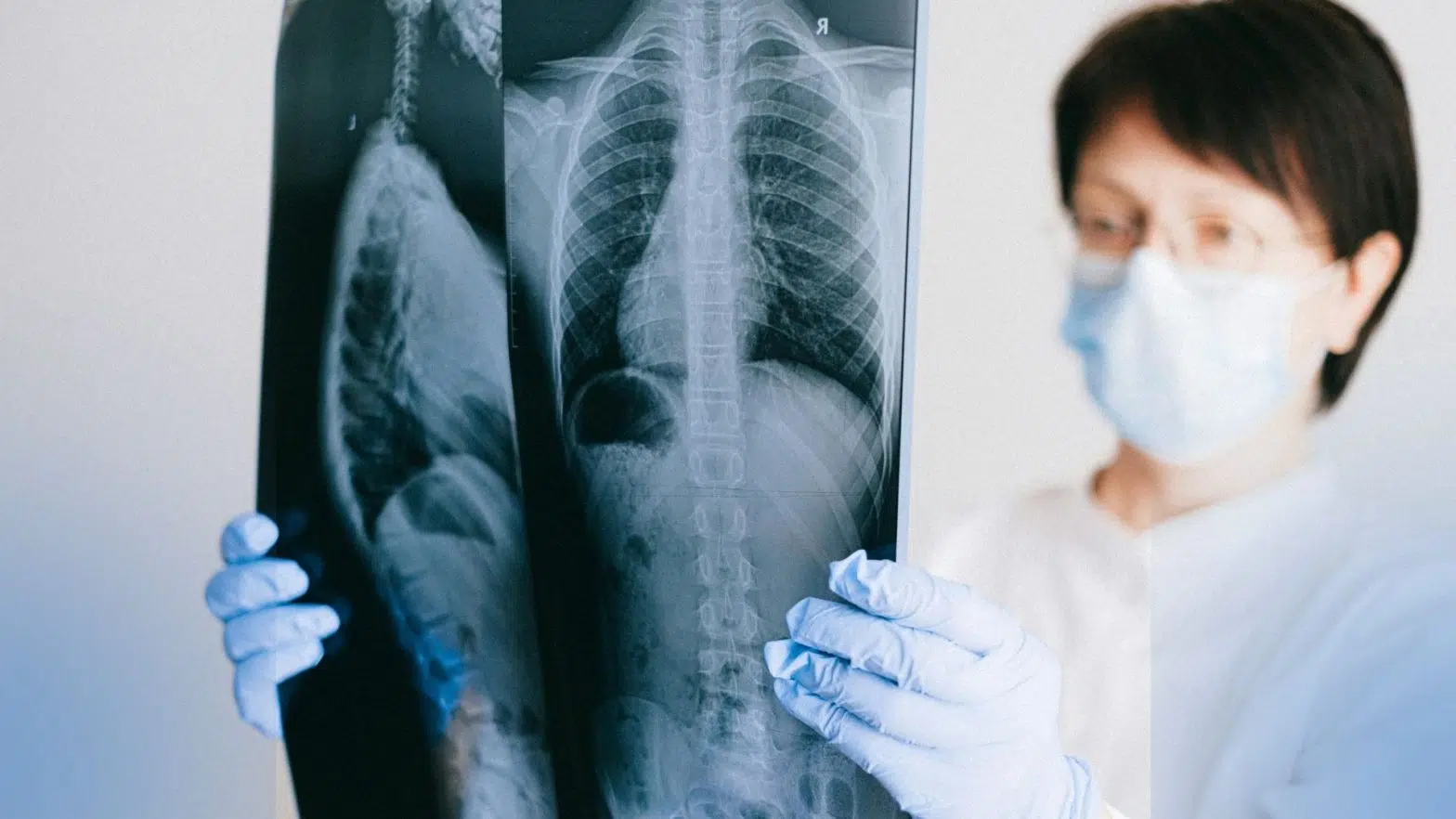
What Is Lung Cancer?
Lung cancer is a disease where cells in the lungs grow out of control and form lumps called tumors.
Your lungs are soft, sponge-like organs that help you breathe. When lung cells get damaged, they may start growing when they shouldn’t. Over time, these cells can make it harder for your lungs to work properly.
Lung cancer usually begins in the air passages (bronchi or bronchioles) or tiny air sacs (alveoli) inside the lungs.
If cancer starts somewhere else and spreads to the lungs, it’s called metastatic cancer, not lung cancer.
Types of Lung Cancer
Doctors group lung cancer into two main types:
- Non-Small Cell Lung Cancer (NSCLC): This is the most common type, found in about 80–85% of cases. It grows more slowly and includes subtypes like adenocarcinoma and squamous cell carcinoma.
- Small Cell Lung Cancer (SCLC): Less common (about 10–15% of cases) but tends to grow and spread faster.
Knowing the type is important because treatment differs for NSCLC and SCLC.
Stages of Lung Cancer
Doctors use stages to describe how far the cancer has spread:
- Stage I: Small tumor found only in one lung.
- Stage II: Larger tumor or spread to nearby lymph nodes.
- Stage III: Cancer has reached lymph nodes or nearby chest structures.
- Stage IV: Cancer has spread (metastasized) to the other lung or to organs such as the brain, liver, or bones.
For small cell lung cancer, doctors may say “limited stage” (in one lung) or “extensive stage” (spread widely).
Staging helps guide treatment choices — early stages may need surgery, while advanced stages may need chemotherapy, radiation, or targeted drugs.
Causes and Risk Factors
1. Smoking
Smoking is the number-one cause of lung cancer. Cigarette smoke has chemicals that damage lung cells. About 80–90% of lung cancer deaths come from smoking.
Even secondhand smoke — breathing someone else’s smoke — raises your risk.
The good news: Quitting at any age helps. Your risk drops as soon as you stop.
2. Radon Gas
Radon is a natural, invisible gas that comes from the ground. It can leak into homes and damage lung cells over time. It’s the second-leading cause of lung cancer after smoking. Testing your home can help you stay safe.
3. Toxic Chemicals at Work
People who work with asbestos, arsenic, diesel fumes, chromium, or nickel have higher risk.
Workers in mining, construction, or manufacturing should use protective masks and ventilation to reduce exposure.
4. Air Pollution
Breathing polluted air over many years can slightly raise your lung cancer risk. Smoke, vehicle exhaust, and industrial fumes all add harmful particles to the air.
5. Genetics and Age
Sometimes, lung cancer happens in people who never smoked. Family history or certain gene changes can increase risk.
Also, older adults are more likely to get lung cancer because lung cell damage builds up with age.
Remember: Anyone can get lung cancer — even non-smokers. About 10–20% of cases happen in people who never smoked.
Common Myths About Lung Cancer
Let’s bust some common lung cancer myths 👇
“Only Smokers Get Lung Cancer.” ❌
Not true. Radon, pollution, and other causes can also lead to lung cancer. Around 1 in 5 people who die from it never smoked.
“If I Quit Smoking, It’s Too Late.” ❌
It’s never too late! Quitting helps your lungs heal and makes treatments work better.
“Lung Cancer Is a Death Sentence.” ❌
Many people live longer now thanks to targeted therapy and immunotherapy. Early-stage lung cancers can sometimes be cured with surgery or radiation.
“Only Older Men Get Lung Cancer.” ❌
Lung cancer affects men and women of all ages. It’s the leading cause of cancer death in women too.
“Everyone with Lung Cancer Has a Cough.” ❌
Not always. Some people have no symptoms at all in the early stages. That’s why screening is so important for people at higher risk.
“Lung Cancer Doesn’t Spread.” ❌
Lung cancer can spread to the bones, brain, liver, and lymph nodes if not treated early.
Early detection gives more treatment options and improves quality of life .
The Bottom Line
Lung cancer is serious — but not hopeless.
Anyone can get it, but awareness, early detection, and new treatments are helping people live longer, healthier lives.
If you notice lasting symptoms like a cough, chest pain, or shortness of breath, talk to your doctor.
Looking for lung cancer clinical trials near you?
Use WeTrials’ Study Finder to explore patient-friendly trial options, support resources, and expert insights.
👉 Explore Lung Cancer Clinical Trials
References
- Cleveland Clinic. (2024). Lung Cancer Overview: Definition and Types. Read More
- American Lung Association. (2024). What Is Lung Cancer? Read More
- Mayo Clinic. (2024). Lung Cancer: Causes. Read More
- American Lung Association. (2024). Causes and Risk Factors. Read More
- Fred Hutch Cancer Center. (2023). 7 Common Misconceptions About Lung Cancer. Read More
- Roche. (2024). Lung Cancer: Myths vs Facts. Read More


Leave a Reply