
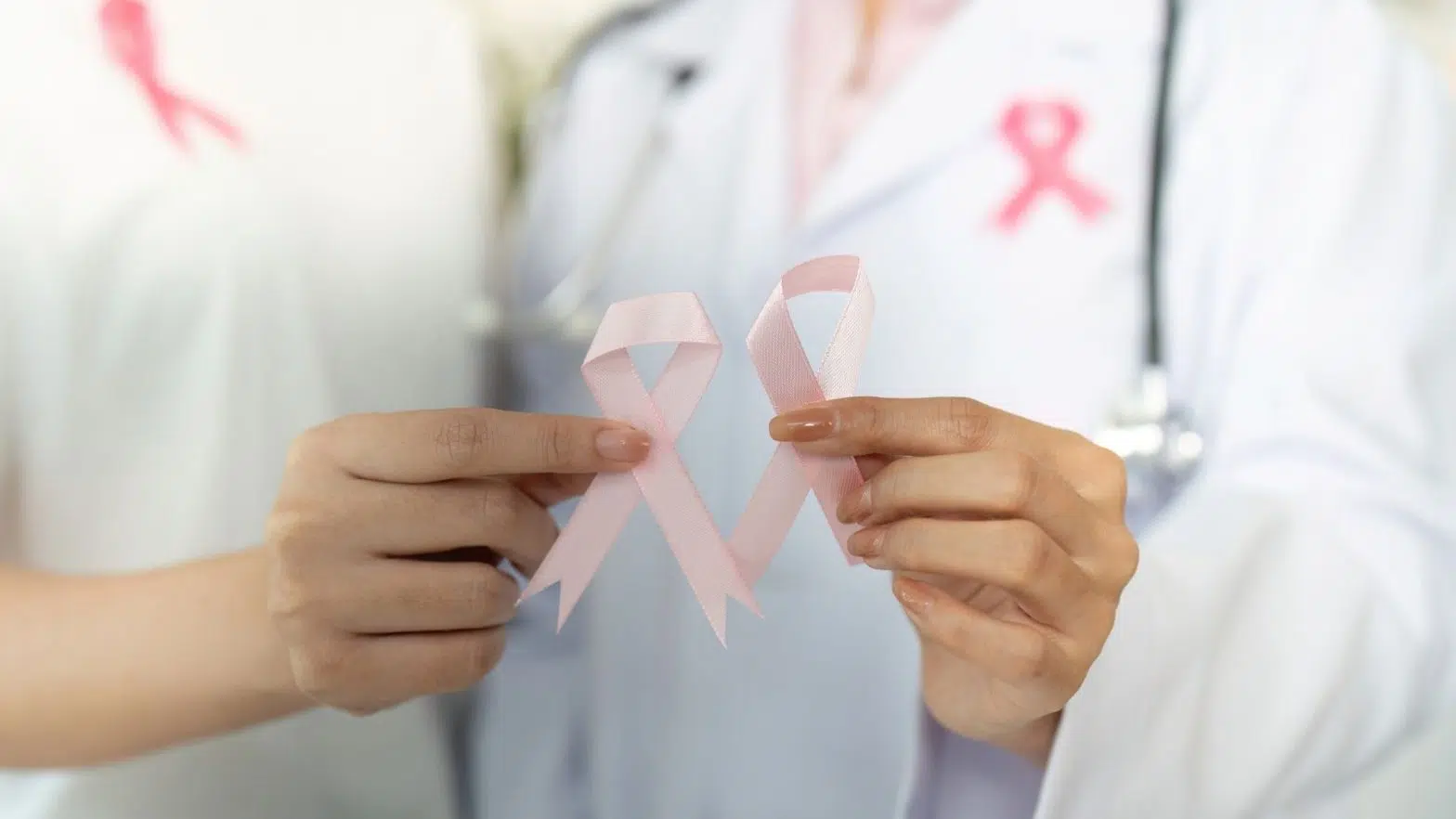
As a parent, hearing the words breast cancer can be scary. But learning the basics about this disease can help you feel more informed and less afraid. In this friendly, easy-to-read overview, we’ll explain what breast cancer is, who it affects, and why finding it early makes a big difference. We’ll also suggest some simple visuals to help families understand this topic better.
What Is Breast Cancer?
A cross-section diagram of a breast showing a cancerous tumor growing (orange area) in the milk ducts and lobules. Visuals like this help families see where breast cancer forms inside the breast. Breast cancer is a disease where cells in the breast change and start to grow out of control, forming a lump called a tumor. It usually begins in the breast’s milk ducts (tiny tubes that carry milk) or in the lobules (milk-producing glands). These cancer cells can keep multiplying and, over time, they can spread beyond the breast. Breast cancer cells may travel through the bloodstream or the lymph system (part of the body’s immune system) to other parts of the body. This is why doctors take breast cancer seriously – they want to treat it before it spreads to other organs.
How it starts: Most breast cancers start in the lining of the milk ducts or in the lobules of the breast. In the beginning, the cancer is usually just in the breast. If it’s found and treated at this early stage, the chances of success are very high. However, if the cancer is not caught early, it can grow and invade nearby tissue or spread to places like the underarm lymph nodes, liver, lungs, bones, or other areas. That process of spreading is called metastasis (muh-TASS-tuh-siss), and it makes the cancer harder to treat. The good news is that breast cancer typically grows slowly, and regular check-ups can catch it before it gets too far.
Who Does Breast Cancer Affect?
Breast cancer can affect anyone, but some people have a higher chance of getting it than others. It is much more common in women, especially as they get older. In fact, most breast cancer cases are found in women over 50 years old. Men can get breast cancer too, but this is very rare (it makes up less than 1% of all breast cancer cases).
To understand how common it is: about 1 in 8 women will develop breast cancer at some point in her life. (That is roughly 13% of women.) This also means 7 out of 8 women will never have breast cancer. So while the risk is significant, it’s far from certain for any individual woman.
Risk Factors for Breast Cancer
A risk factor is something that makes it more likely for a person to get a disease. Here are some of the main risk factors for breast cancer, explained in simple terms:
- Age: Getting older increases the risk. Most breast cancer patients are over 50.
- Gender: Being female is the biggest risk factor – women are much more likely to develop breast cancer than men.
- Family history: Having close relatives (like a mother, sister, or daughter) who had breast cancer can raise your risk. For example, if your mom or sister had breast cancer, you should be more watchful.
- Genetic factors: Inheriting certain gene changes can make breast cancer more likely. The most famous examples are the BRCA1 and BRCA2 gene mutations. Families with these gene mutations have a higher rate of breast cancer.
- Unhealthy habits: Smoking tobacco and drinking a lot of alcohol can increase the chance of breast cancer. These substances can damage cells and lead to cancer over time.
- Weight and exercise: Being very overweight (obese) can raise the risk of breast cancer, especially after menopause (when a woman’s periods have stopped). On the other hand, staying active and at a healthy weight lowers the risk.
It’s important to remember that having a risk factor (or even several) does not mean you will definitely get breast cancer. It just means your chances are higher than someone without those factors. Many women who develop breast cancer have no clear risk factors at all. And most women who do have risk factors never get the disease. So, while risk factors are helpful to know, they don’t tell the whole story. Everyone should be mindful of breast health, even if they don’t think they have risks.
Why Early Detection Matters
Finding breast cancer early — before it grows large or spreads — gives the best chance for a positive outcome. Doctors use the term “early detection” to mean catching the cancer early, often through screening tests or by noticing symptoms right away. Early detection is so important because breast cancer can often be treated more easily when it’s small and only in the breast.
Silent beginnings: One tricky thing about breast cancer is that it may not cause any symptoms at first. Many women with early breast cancer feel completely fine and have no idea anything is wrong. This is why regular screening is crucial. A mammogram (an X-ray exam of the breast) can often find a tumor before it can be felt. Doctors generally recommend that women start having mammograms in their 40s or 50s (depending on guidelines) and continue them every year or two. Catching a tumor on a mammogram early, when it’s very small, can save a life.
Know the warning signs: While screening tests can find cancers early, it’s also important to know the signs of breast cancer that you can see or feel. The most common warning sign is a new lump or thickening in the breast (or under the arm). Any lump or change in the breast should be checked by a doctor. Other signs to watch for include a change in the size or shape of the breast, dimpling or puckering of the skin (the skin might look like an orange peel), redness or rash on the breast that doesn’t go away, or unusual fluid (discharge) from the nipple. If a nipple that used to point outward suddenly pulls inward (becomes inverted) or if the breast skin has swelling or warmth, those could be signs too.
Better outcomes when found early: Finding breast cancer early greatly improves the chances of successful treatment. Medical research and statistics back this up. If breast cancer is caught when it’s still small and confined to the breast (often called Stage 0 or Stage I, localized cancer), the outcome is usually excellent. In fact, about 99% of people diagnosed at an early stage survive at least five years after their diagnosis, and many go on to live a normal lifespan beyond that. Doctors often consider early-stage breast cancer highly treatable or even curable. Treatment for early-stage cancer might involve surgery (to remove the lump) and sometimes medication or radiation, but it is often less aggressive than treatment for advanced cancer. On the other hand, if breast cancer is found at a later stage, especially after it has spread to other parts of the body (this is called metastatic or Stage IV cancer), it becomes much more serious. Survival rates drop significantly when the cancer has spread. Only around 30% of patients with distant (Stage IV) breast cancer are alive five years after diagnosis. Treatment at this stage is harder and may only control (but not cure) the disease. A visual chart that shows the difference between early and late detection can be powerful.
Saving lives through awareness: Early detection is one of the main reasons breast cancer deaths have been dropping over the past few decades. Doctors and health organizations encourage regular screenings and breast health awareness, and it’s made a big difference. Since 1989, the breast cancer death rate for women in the U.S. has fallen by about 40–50%. That means tens of thousands of lives have been saved. This improvement is thanks to finding cancers earlier (when they’re easier to treat) and better treatments developed by researchers. It shows that knowledge and vigilance really do pay off. In practical terms, early detection can mean simpler and less expensive treatment, too. A small tumor might be removed with a minor surgery and maybe a short course of treatment, whereas an advanced cancer might require more intense chemotherapy, longer surgeries, or other complex care. By finding it early, many women can keep their breasts (through a lumpectomy, which removes just the tumor) instead of needing a full breast removal (mastectomy). They might also avoid the toughest chemotherapy drugs if the cancer is caught very soon. All of these are additional reasons why we want to detect breast cancer as early as possible.
Helpful visuals for families: To reinforce the importance of early detection, families might use a few kid-friendly visuals. For instance, a diagram of the breast (like the one above) shows where breast cancer starts, which can help children understand the anatomy.
In summary, breast cancer is common – especially in women – but there are ways to reduce risk and fight it. Staying healthy with good habits (like not smoking, eating well, and exercising) can help lower the risk.
Just as important is being aware: knowing what breast cancer is and why catching it early matters. Many families have been touched by breast cancer in some way, so talking about it in simple terms can help children understand what might be happening to a loved one or why Mom is going to the doctor for a check-up.
The message for parents and kids alike is one of hope and action: Breast cancer is much less dangerous when found early, and thanks to research and early detection, millions of women are living full, healthy lives after breast cancer. By learning about the disease, encouraging regular screenings, and supporting loved ones, families can play a big part in beating breast cancer.
Looking for breast cancer support resources near you?
Use WeTrials’ Breast Cancer to explore patient-friendly trial options, support resources, and expert insights.
References
- Cleveland Clinic – Breast Cancer: Symptoms, Types, Causes & Treatment. Cleveland Clinic, updated 2023 Read More
- American Cancer Society – What Is Breast Cancer? (Overview of how breast cancer starts, spreads, and who it affects) Read More
- American Cancer Society – Key Statistics for Breast Cancer (2025). Includes lifetime risk (1 in 8) and age distribution Read More
- American Cancer Society – Breast Cancer Early Detection and Diagnosis. Emphasizes importance of screening and lists common symptoms Read More
- American Cancer Society – Lifestyle-Related Breast Cancer Risk Factors. Explains that risk factors don’t guarantee disease Read More


Leave a Reply